Goatherds of Petra
Jordan, 2014
For generations, Bedouin families in Wadi Musa, southern Jordan, lived from goat herding and small-scale farming, guided by the rhythms of the land and close-knit community life. In 1985, Petra — the ancient Nabatean city carved into pink sandstone more than 2,000 years ago — was declared a UNESCO World Heritage Site. What had long been a remote hinterland rapidly transformed into one of the region’s most visited destinations, drawing hundreds of thousands of tourists each year.
Above the archaeological site lies Umm Sayhoun, home to the indigenous Bdoul Bedouin tribe. Nomadic communities are known to have inhabited the area since at least the sixteenth century, though the precise beginnings of Bdoul settlement in Petra remain uncertain.
In 2014, Hübner visited the village several times and was welcomed into the home of Saleman (59), a goatherd, and his extended family. Together with his three wives and fifteen children, they continue a pastoral way of life that has endured for centuries.
During his visits, Hübner took part in family gatherings, long afternoons with young Bdoul men, and the three-day wedding celebration of Saleman’s eldest son, Mohammed. Much of his time was spent alongside Agile, Saleman’s first wife and mother of eight children. Each morning, she leads the goats from the valley into the mountains, where scarce natural grazing still grows, returning late in the day to milk them before riding back to the village.
For generations, Bedouins have followed the same steep mountain paths used by their herds. In extreme heat and rugged terrain, Agile continues this daily routine, knowing each animal by heart and watching constantly for danger. Her work reflects a quiet continuity in a landscape increasingly shaped by tourism and outside influence.
Goatherds of Petra follows a Bdoul Bedouin family living at the edge of two worlds — between ancestral traditions and the accelerating forces of modernity and change.

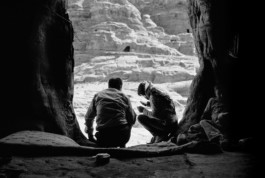
Resting in the caves of Petra, Jordan • 2014

Extraction of black powder in Petra, Jordan • 2014

B'doul boy in Uum Sayhoun, Jordan • 2014
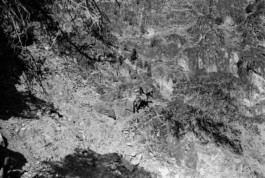
Climbing the mountain in Petra, Jordan • 2014

Agile on the mountain, near Petra, Jordan • 2014

Agile signaling the goats near Petra, Jordan • 2014

Donkey and mule in the mountains near Petra, Jordan • 2014

Bedouin in Uum Sayhoun, Jordan • 2014

Preparing the Goats in Petran, Jordan 01 • 2014

Preparing the Goats in Petran, Jordan 02 • 2014

Transport back to Uum Sayhoun, Jordan • 2014

Bedouin village Uum Sayhoun near Petra, Jordan • 2014

Celebrating in Uum Sayhoun, Jordan • 2014

Goatherds of Petra
Jordan, 2014
For generations, Bedouin families in Wadi Musa, southern Jordan, lived from goat herding and small-scale farming, guided by the rhythms of the land and close-knit community life. In 1985, Petra — the ancient Nabatean city carved into pink sandstone more than 2,000 years ago — was declared a UNESCO World Heritage Site. What had long been a remote hinterland rapidly transformed into one of the region’s most visited destinations, drawing hundreds of thousands of tourists each year.
Above the archaeological site lies Umm Sayhoun, home to the indigenous Bdoul Bedouin tribe. Nomadic communities are known to have inhabited the area since at least the sixteenth century, though the precise beginnings of Bdoul settlement in Petra remain uncertain.
In 2014, Hübner visited the village several times and was welcomed into the home of Saleman (59), a goatherd, and his extended family. Together with his three wives and fifteen children, they continue a pastoral way of life that has endured for centuries.
During his visits, Hübner took part in family gatherings, long afternoons with young Bdoul men, and the three-day wedding celebration of Saleman’s eldest son, Mohammed. Much of his time was spent alongside Agile, Saleman’s first wife and mother of eight children. Each morning, she leads the goats from the valley into the mountains, where scarce natural grazing still grows, returning late in the day to milk them before riding back to the village.
For generations, Bedouins have followed the same steep mountain paths used by their herds. In extreme heat and rugged terrain, Agile continues this daily routine, knowing each animal by heart and watching constantly for danger. Her work reflects a quiet continuity in a landscape increasingly shaped by tourism and outside influence.
Goatherds of Petra follows a Bdoul Bedouin family living at the edge of two worlds — between ancestral traditions and the accelerating forces of modernity and change.

Resting in the caves of Petra, Jordan • 2014

Extraction of black powder in Petra, Jordan • 2014

B'doul boy in Uum Sayhoun, Jordan • 2014

Climbing the mountain in Petra, Jordan • 2014

Agile on the mountain, near Petra, Jordan • 2014

Agile signaling the goats near Petra, Jordan • 2014

Donkey and mule in the mountains near Petra, Jordan • 2014

Bedouin in Uum Sayhoun, Jordan • 2014

Preparing the Goats in Petran, Jordan 01 • 2014

Preparing the Goats in Petran, Jordan 02 • 2014

Transport back to Uum Sayhoun, Jordan • 2014

Bedouin village Uum Sayhoun near Petra, Jordan • 2014

Celebrating in Uum Sayhoun, Jordan • 2014
Back to top ↑
You cannot copy content of this page