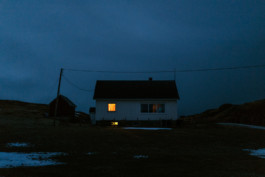
In the high, windswept North, the Atlantic Ocean crashes against the rugged coastlines of Norway’s many islands. Life here is shaped by a harsh and unpredictable climate — long, bitter winters during polar nights when darkness lingers for months, followed by brief, cool summers illuminated by the ceaseless midnight sun.
The few people who inhabit these remote islands have either made a conscious choice to live here or were born into it: a life largely without modern conveniences, defined instead by isolation and self-reliance.
On journeys along the rugged edges of the Arctic Circle, Hübner visited several of these islands and their isolated inhabitants.
Since 1982, Asbjørn (78) has lived alone on the island of Grøtøya. He first discovered the island at seventeen during a kayak trip and soon decided to settle there permanently. Four times a year, his younger brother arrives by boat with fresh food and essential supplies. Otherwise, Asbjørn is entirely on his own. Violent winter storms regularly batter the headland where his cabin stands, sometimes for weeks. During these periods, he remains indoors, hoping his wind turbines — his source of electricity — withstand the merciless winds. To pass the time, he reads or observes the rhythm of the sea, drifting clouds, steep mountain slopes, and seabirds through his binoculars.
When Bjarne (64) moved to Sandøya in 1979, fifteen elderly residents shared the island, living from farming and fishing. Over time, all his neighbors passed away. Today, Bjarne remains alone in his small house by the sea. A ferry arrives twice a week with provisions he orders online. Occasionally, visitors disembark to spend weekends in scattered cottages near the pier. Otherwise, solitude defines daily life on an island first settled in the ninth century and largely depopulated in the seventeenth. Each day, Bjarne walks the coastline and beaches. When weather permits, he skis in the mountains. He listens to seagulls, watches seals observing him from a distance, and follows the steady sound of waves. He calls it his personal concert.
On Musvær, a farming family continues a tradition dating back to 1832. Over generations, fields were cleared, docks built, roads laid, and buildings repaired. Today, brothers Nicolai (17) and Alexander (12), together with their parents, care for 164 goats, milked twice daily. A ferry collects the milk and takes the boys to school on a neighboring island each weekday. They know every stone and slope by heart, growing up in isolation with only brief digital glimpses of the outside world. Separated from society — and from one another — by open sea, these islanders share a deep bond with their landscapes. What unites them is a devotion to place, a quiet persistence shaped by solitude, nature, and time.
A Remote Home received the SOMFY Photography Award in 2022 and was exhibited at Fotomuseum aan het Vrijthof in Maastricht, The Netherlands.


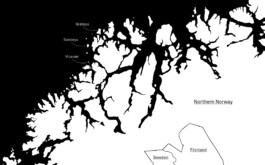
The islands Grøtøya, Sandøya, and Musvær in Northern Norway.

Musvær I, Norway • 2022

Musvær II, Norway • 2022

Bjarne on Sandøya, Norway • 2022

Grøtøya I, Norway • 2022

Sandøya I, Norway • 2022

Storsteinnestindan, Kvaløya, Norway • 2022

Alexander on Musvær, Norway • 2022

Grøtøya II, Norway • 2022
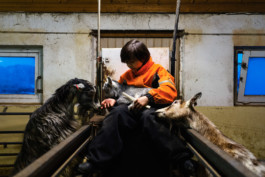
Sigurd on Musvær, Norway • 2022
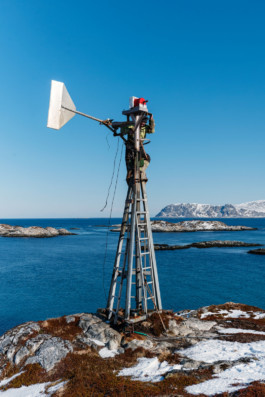
Asbjørn on Grøtøya I, Norway • 2022
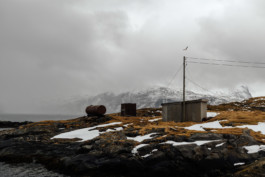
Musvær III, Norway • 2022
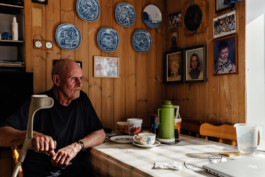
Asbjørn on Grøtøya II, Norway • 2022
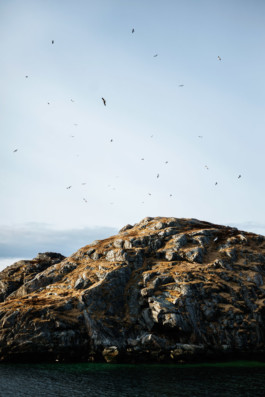
Musvær IV, Norway • 2022
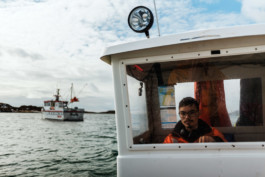
Nicolai near Musvær, Norway • 2022
Musvær V, Norway • 2022

The islands Grøtøya, Sandøya, and Musvær in Northern Norway.
Musvær I, Norway • 2022
Musvær II, Norway • 2022
Bjarne on Sandøya, Norway • 2022
Grøtøya I, Norway • 2022
Sandøya I, Norway • 2022
Storsteinnestindan, Kvaløya, Norway • 2022
Alexander on Musvær, Norway • 2022
Grøtøya II, Norway • 2022
Sigurd on Musvær, Norway • 2022
Asbjørn on Grøtøya I, Norway • 2022
Musvær III, Norway • 2022
Asbjørn on Grøtøya II, Norway • 2022
Musvær IV, Norway • 2022
Nicolai near Musvær, Norway • 2022
Musvær V, Norway • 2022